
Today, we sailed the final leg of our upstream journey on the Douro. The trip included two locks: one at Valeira and the second at Pocinho, which was also our destination.
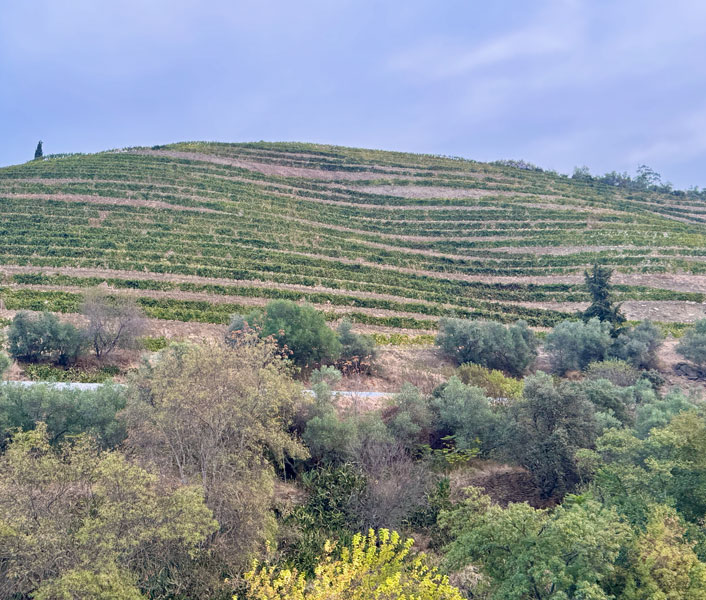
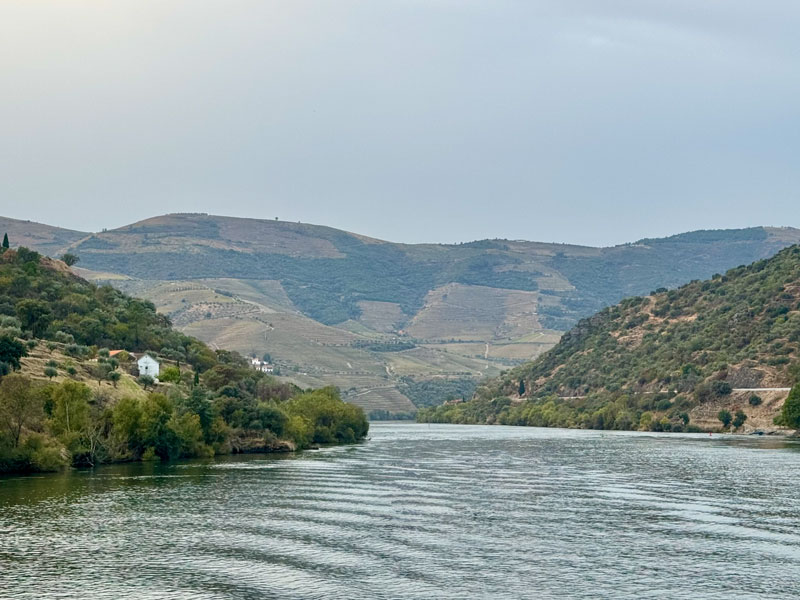
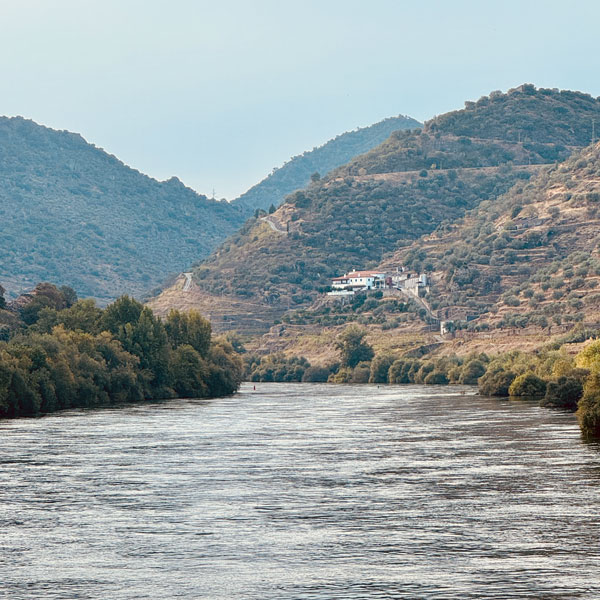
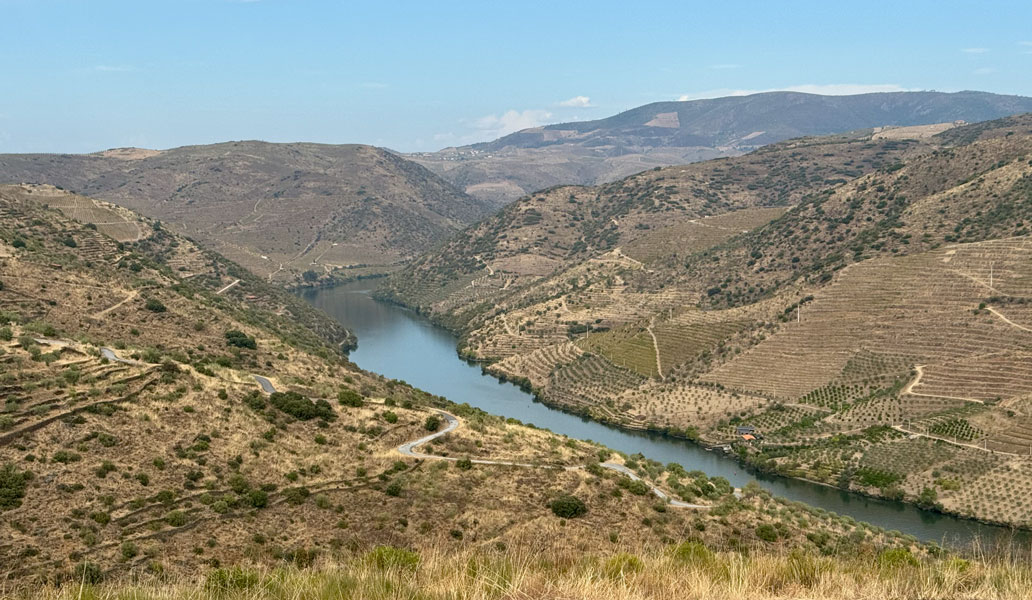
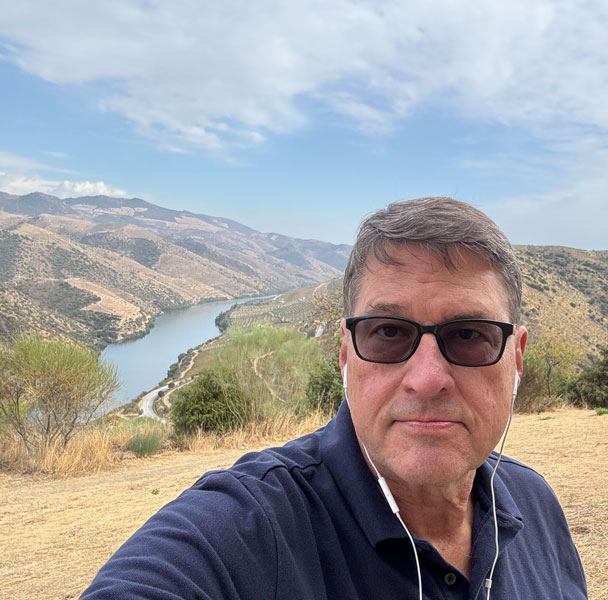
The landscape during this final stretch was incredible. The rolling hills that spilled down into the flowing river, while pretty much devoid of any agricultural product at this time of year, had a raw natural beauty even in their autumnal state.
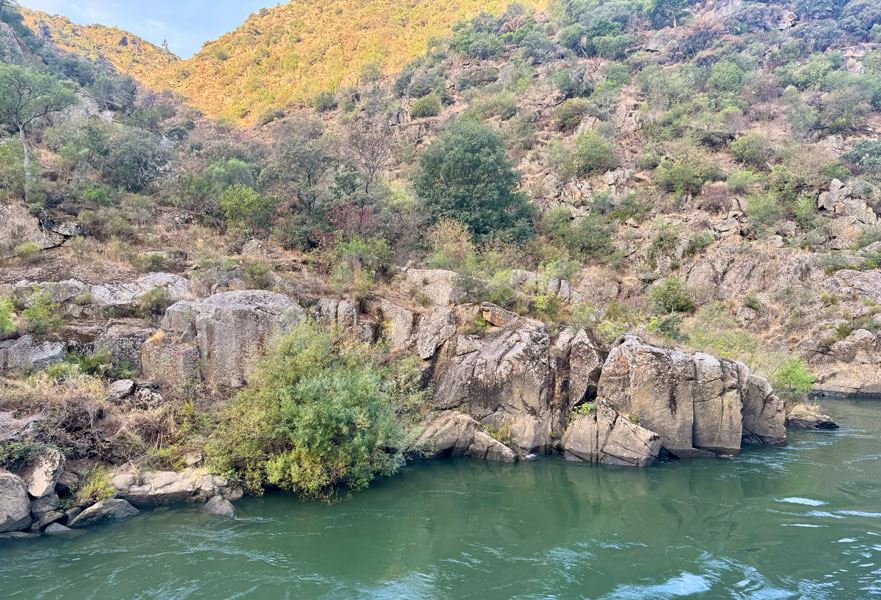
There were points along the sinuous channel where it narrowed, hemmed in by huge boulders that seemed to rise from the water’s depths. According to Joana, prior to man’s interference, the strong currents in this part of the river were extremely dangerous even for the Rabelo sail-and-pole-powered boats built to transport wine barrels downriver to Porto. When the river was being made navigable with dams and dredging, there was one particular cliff that protruded into the river at one of the bends, creating a particularly treacherous area for sailors. To solve this problem, said mountain was blown up, deepening the channel and opening up the river’s flow. Today, the flanking cliff’s facade of exposed, jagged boulders flow down to and line the river banks. They seem to be all that remains of the former obstruction…at least to my eyes.
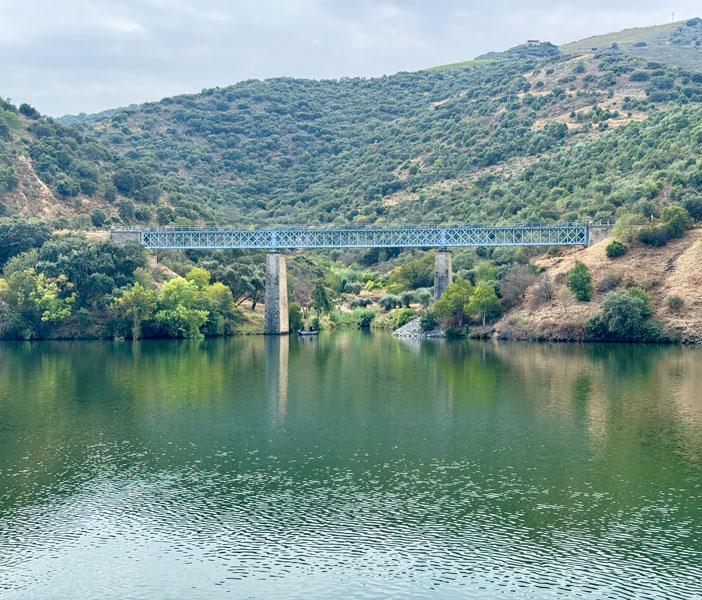
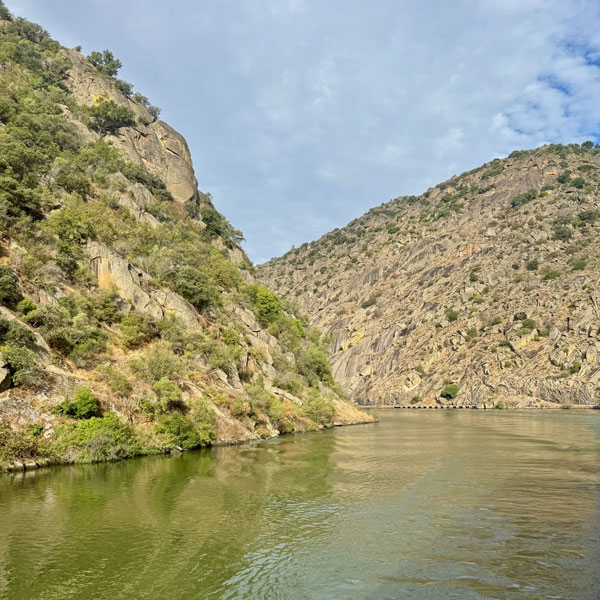
An aside, MDR: Today, for some reason, it was particularly obvious that this trip is more a cruise from one meal to the next rather than from place to place! People are discussing breakfast the night before, often during dinner, and wondering when lunch is served before the breakfast plates are cleared. We’ve barely digested one meal…and the announcement is made for the next. Today, that free time between breakfast and lunch was filled with a demonstration of Portuguese flavors and foods! No wonder we’re heading towards the world of WALL-E.
The Côa Museum
I’ll try to keep this short. Portugal planned to dam up the Côa River. Throughout the valley created by this river, a treasure trove of Palaeolithic art was discovered: etchings done in the vertical slate rocks that are endemic to the region. When the dam plans became known, locals and students rose up against the project. Then a major Portuguese politician sided with the protestors and the project was scrapped. The ancient art was preserved and the Côa Museum was built and opened in 2010. Today, the museum and associated foundation manage the Côa Valley Archeological Park.
We toured the museum, a massive (almost Soviet-style) concrete bunker discreetly placed upon a hilltop overlooking the river. It is filled with information about and facsimiles of the Palaeolithic art still in situ in the valley. (Tours can be arranged to visit actual sites to see the real thing.)
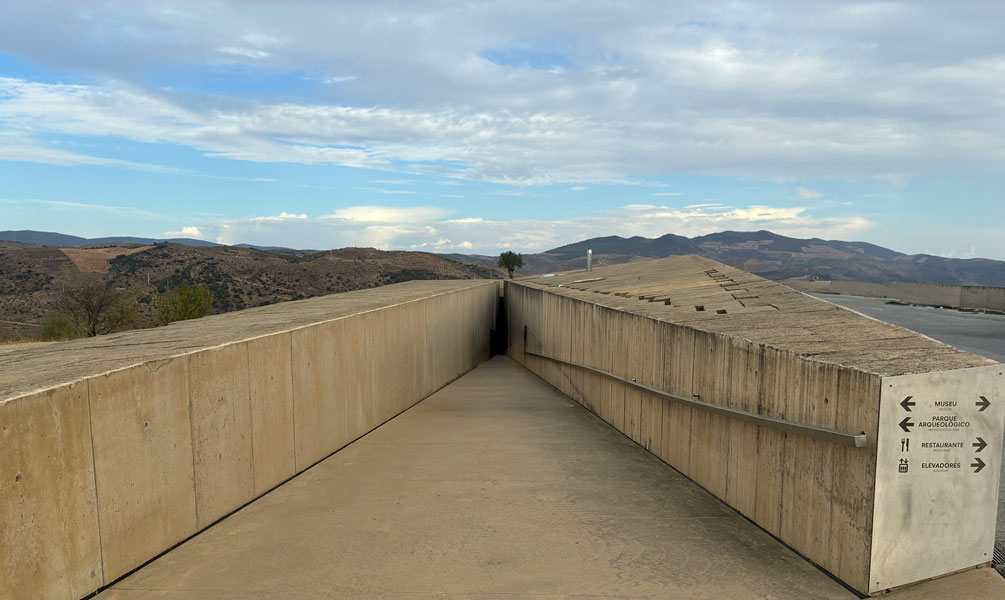
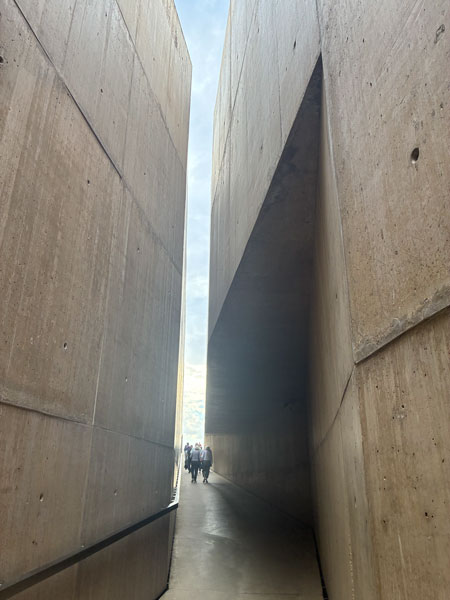
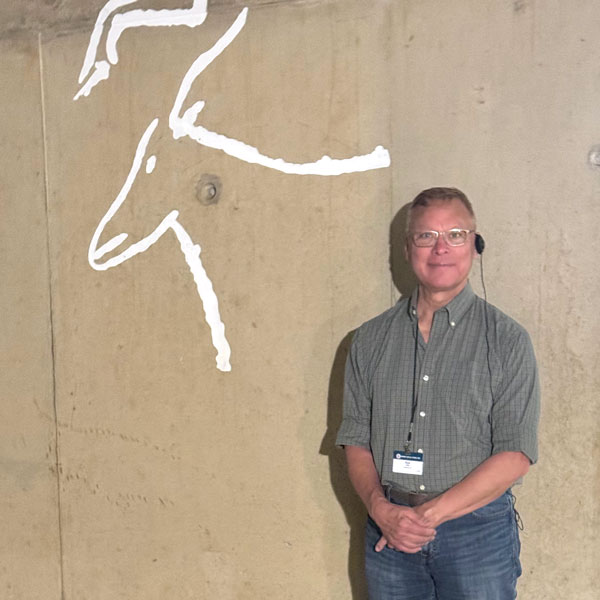
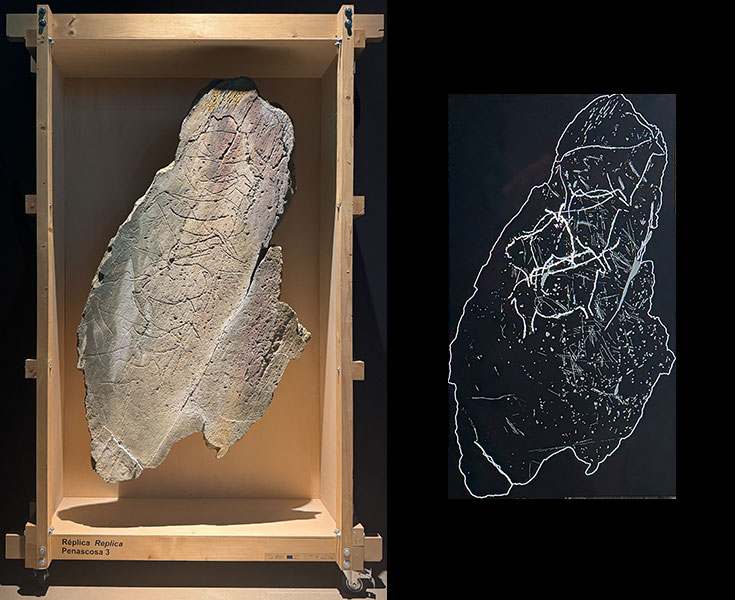
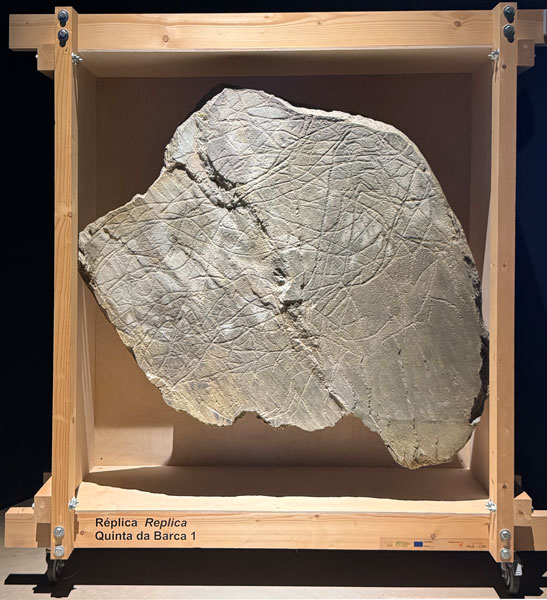
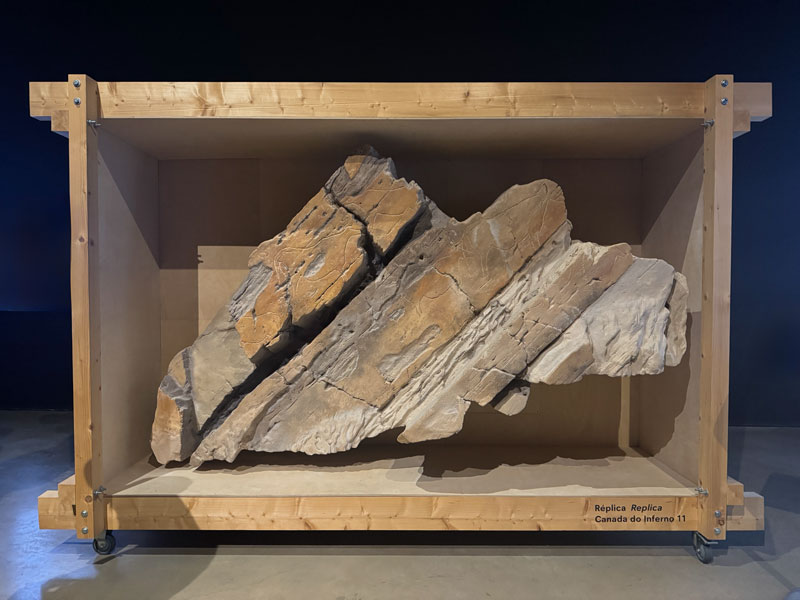
The Stone Age inhabitants etched images of familiar animals into the shale. Only four different species were depicted: aurochs (extinct wild bulls), horses, red deer, and ibex (wild goats.) To paraphrase Mark Twain, you paint what you know.
Over time, newer etchings were overlaid on existing ones. Extracting the many different images has been a challenge.
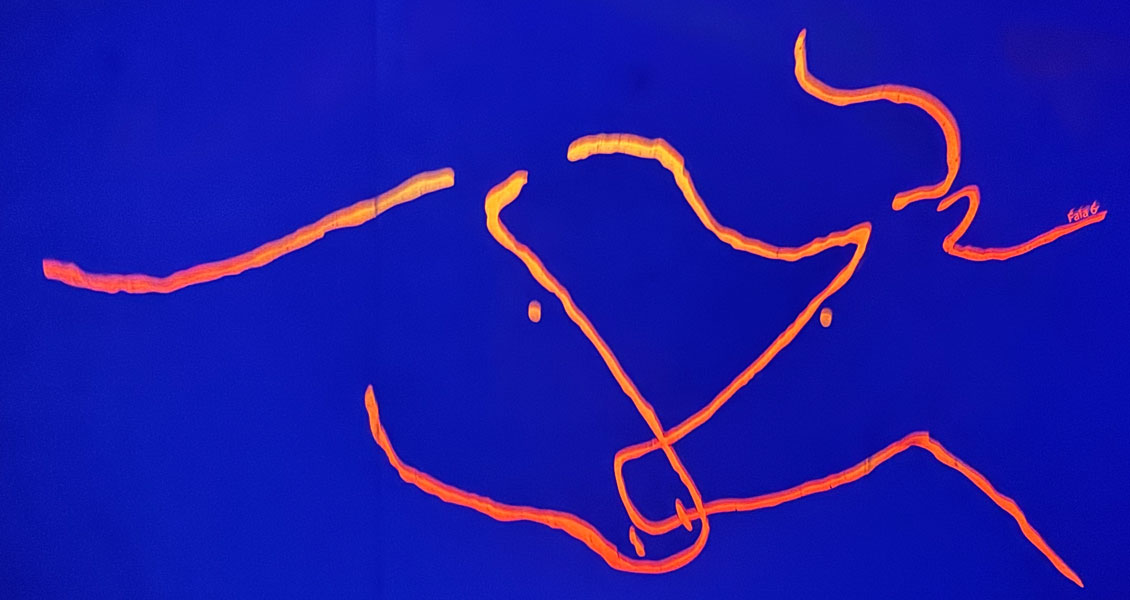
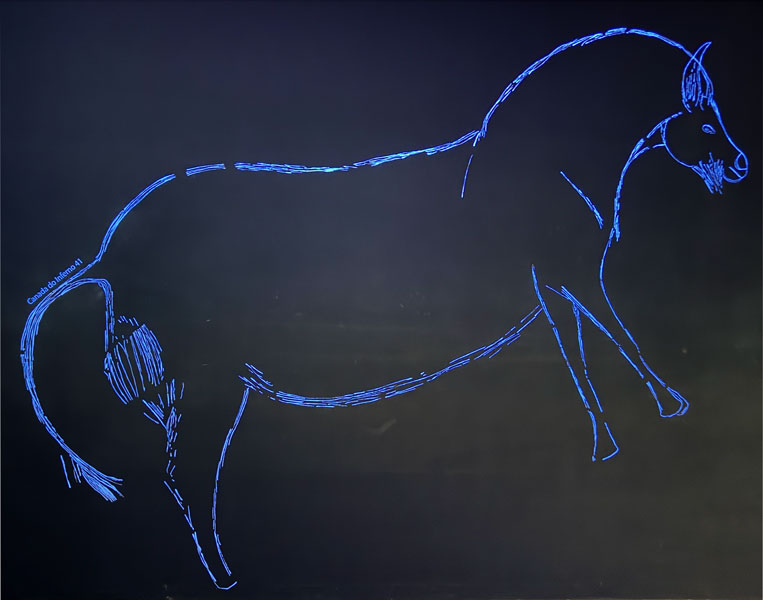
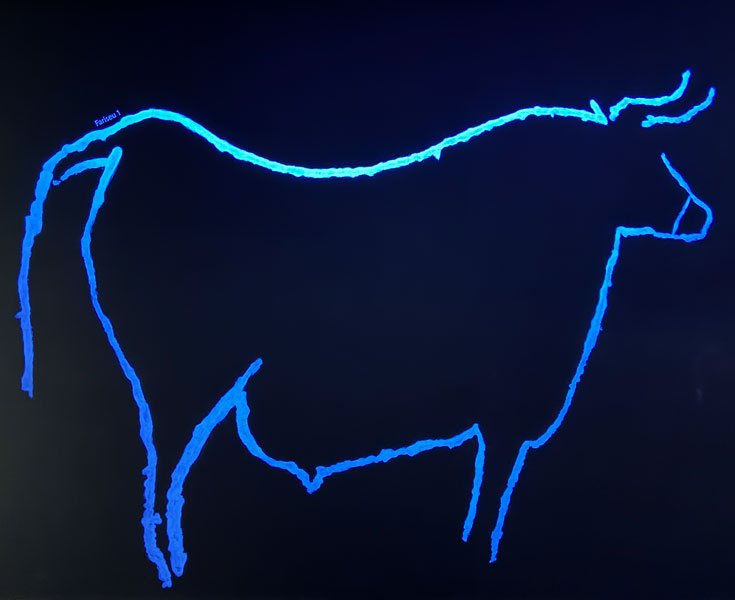
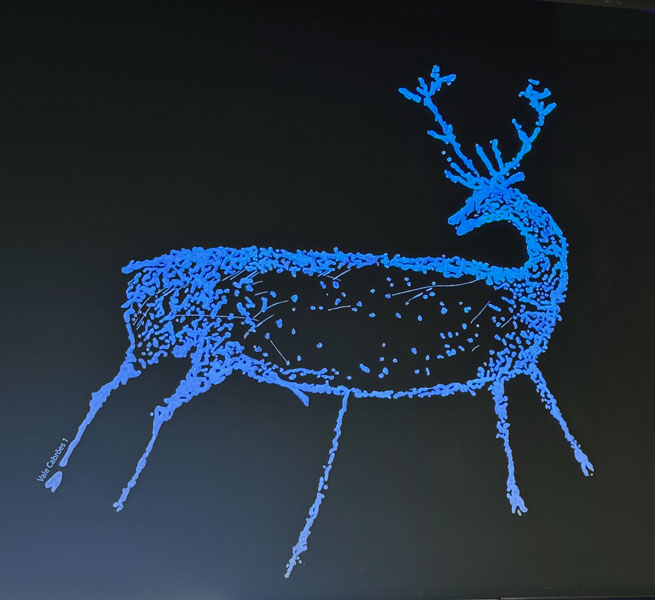
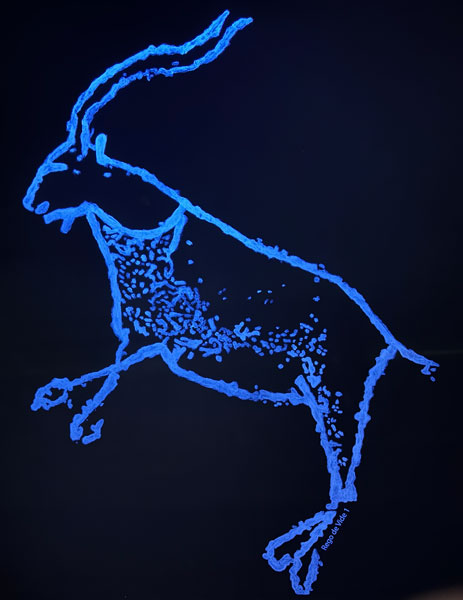
The museum has created replicas of some of the slate “canvases” used by these primitive artists. In the photos below, the center one (in black & white) is a partial legend to the etchings on the stone to the left. It indicates the location of three of the depicted animals.
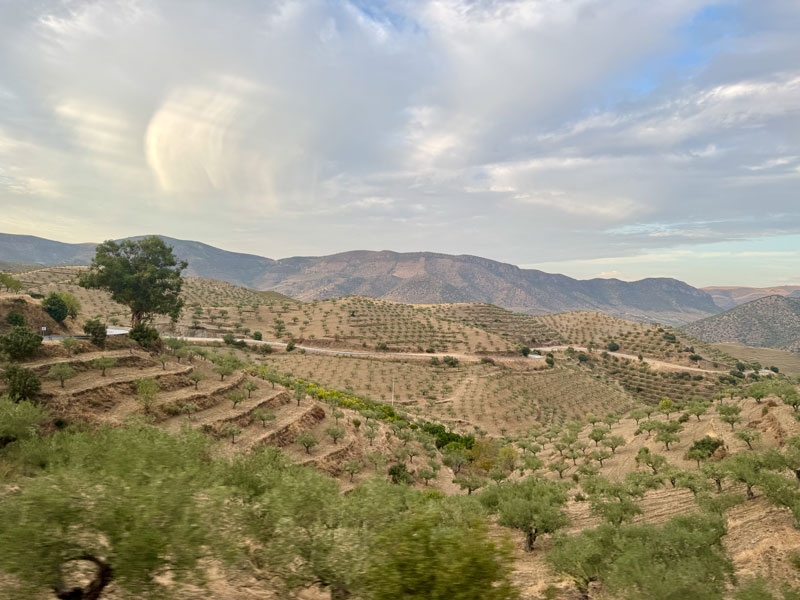
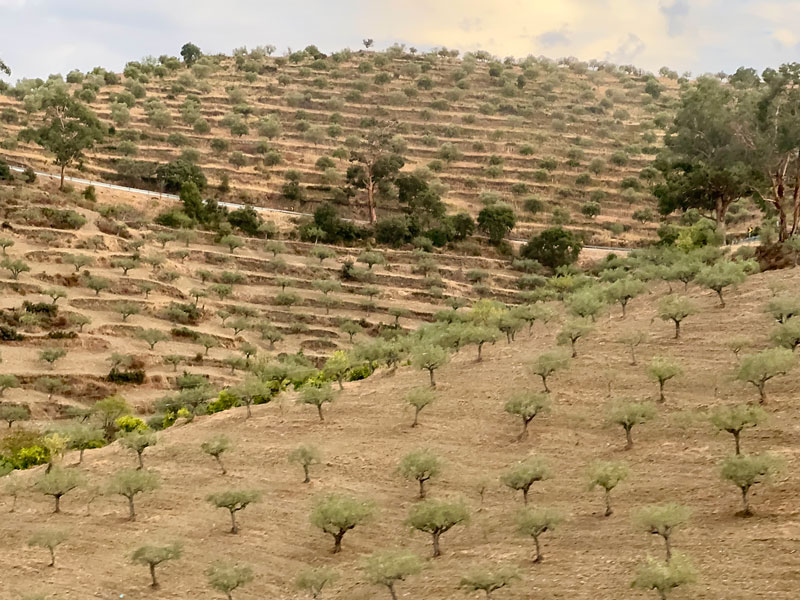
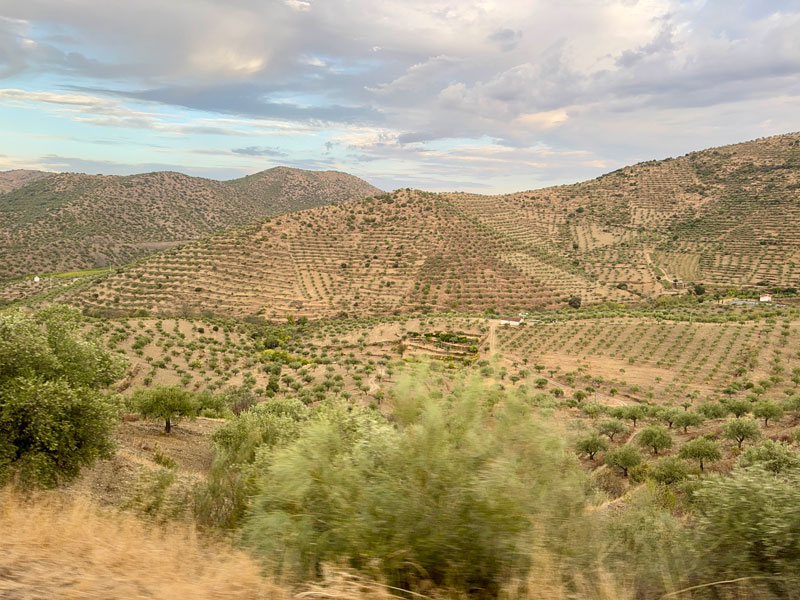
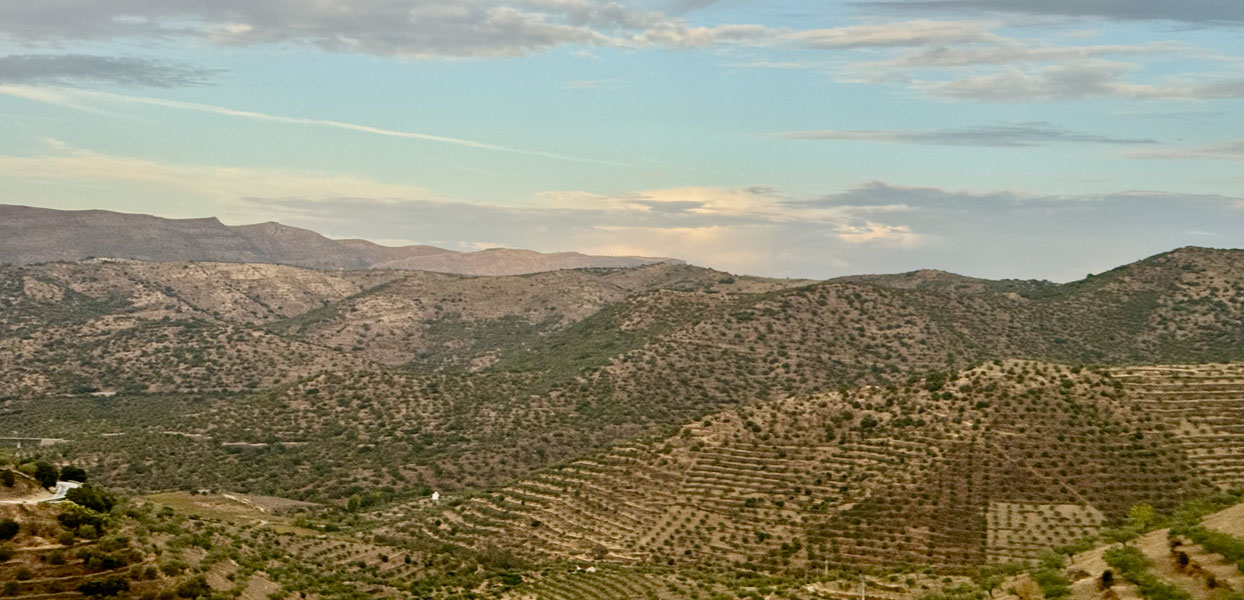
After spending time at the museum, we re-boarded the bus for the ride to Barca D’Alva and our ship. The landscape was intriguing, sculptured and planted to meet the agricultural needs of the locals.
 Portugal: Lisbão to Oporto