
Today, we split up and went our separate ways exploring Lisbon. Nancy took the Grand Circle bus tour which included the Belém area that we had Katya skip over yesterday. Rob and Peg did some errands around the hotel, with plans to meet up with Nancy for lunch and to walk the weekend flea market along Avenida da Liberdade. (We had seen the vendors shutting down for the night during yesterday’s neighborhood walkabout.)
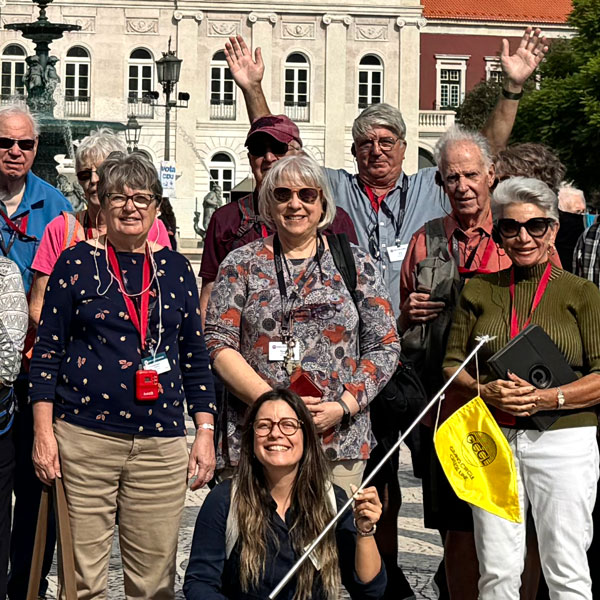
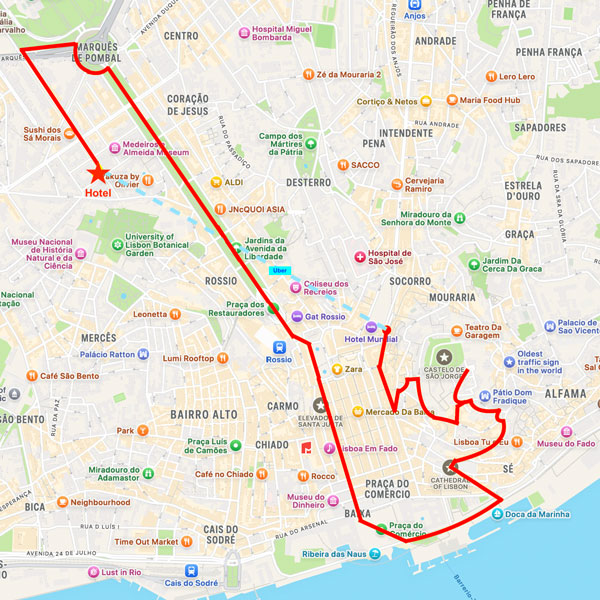
I chose my own 14,000+ step path to and through many of Lisbon’s major landmarks and points of interest, checking off my wanna-sees one after another. And so the journey begins.
Praça do Marquês de Pombal
Leaving the hotel, I had Siri pin down the most direct route to my intended starting point: the large traffic roundabout at Marquis of Pombal Square. This “square-in-a-circle” is one terminus of the grand tree-lined boulevard, the Avenida da Liberdade (Liberty Avenue). Modeled after the Champs-Élysées in Paris, the boulevard connects Marquis of Pombal Square to Restauradores Square and the beginning of Lisbon’s downtown Baixa neighborhood.
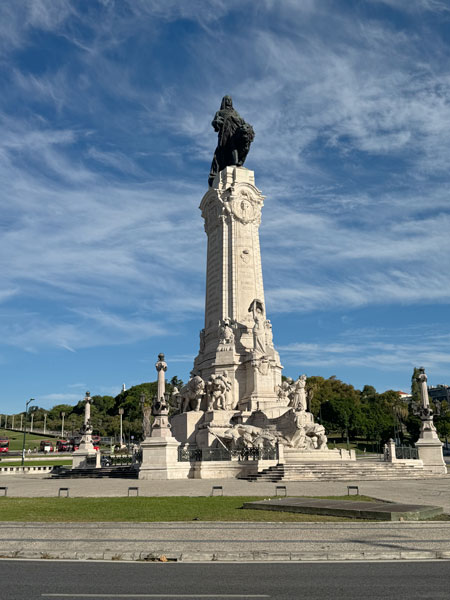
In the center of this huge traffic circle stands an imposing monument honoring the eponymous Marquis of Pombal (real name: Sebastião José de Carvalho e Melo). A tall column supports a bronze figure of the man with a symbolic lion to represent the power he wielded. Surrounding the base are four allegorical tableaux related to his accomplishments.
But, while searching for his real name (something all Portuguese school children had to commit to memory, according to Joana), I discovered he was not a very nice person. While instrumental in helping Lisbon recover and rebuild after the 1755 earthquake, he became too powerful and curtailed liberties, suppressed the opposition, and fostered the slave trade, among other atrocities. A name maybe better forgotten.
Avenida da Liberdade
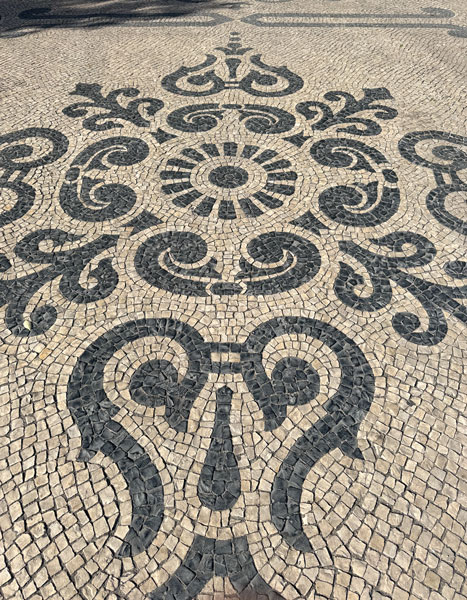
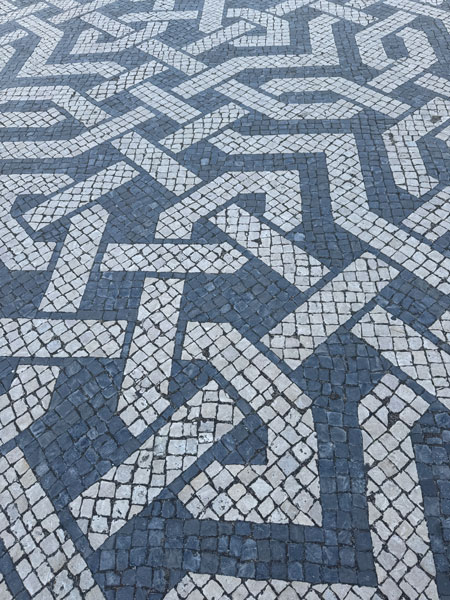
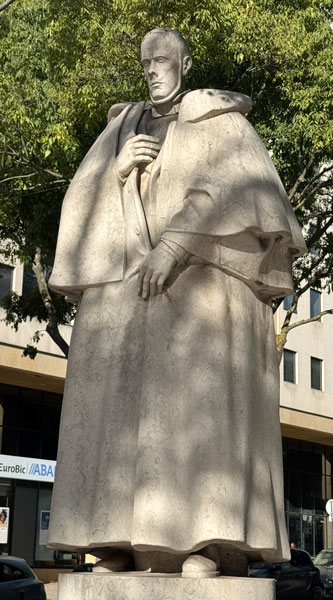
Leaving the mean marquis behind, I began my journey through the center of the multi-lane Avenida. The promenade was a feast for the eyes. First, I was impressed with the intricate patterns of inlaid stones that covered the sidewalks from start to finish. (I later learned that this beautiful and functional expression of Portuguese culture is called Calçada Portuguesa or Portuguese pavement.) As I continued walking, I came across numerous statues and small monuments lining the park-like spine of the boulevard.
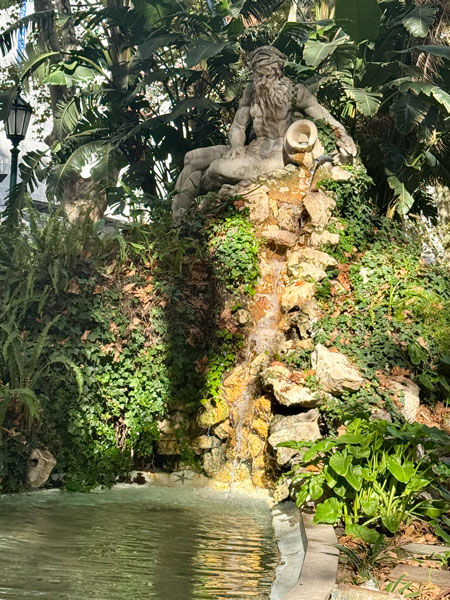
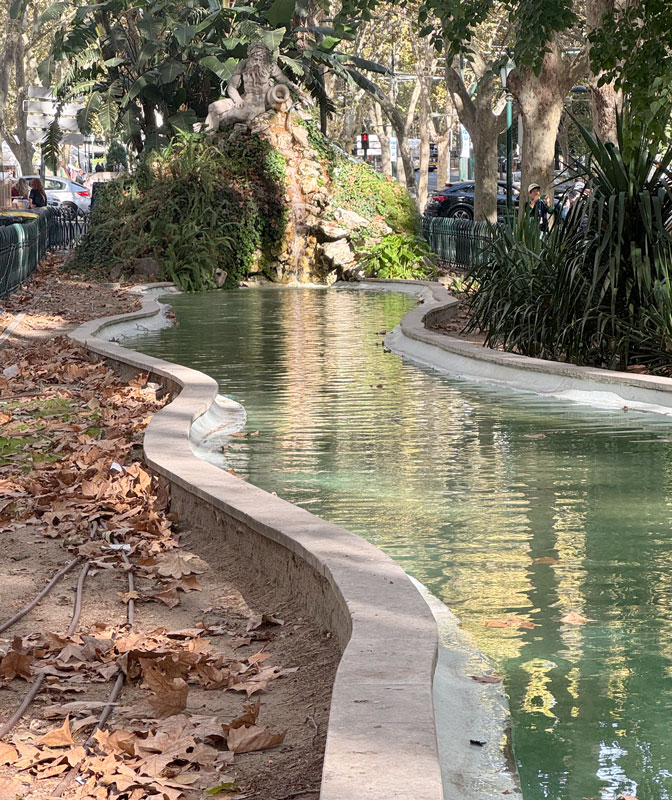
One of my favorites statues was the allegorical representation of the source of the Tagus River. Here, a bearded man perched atop a tower of rocks starts the river’s flow with a cascade of water pouring from a large, tilted urn. From the base of this statue, a serpentine “river” then flowed for several blocks, with a few cast-iron bridges giving access to the opposite “shore.”
I also took some time to browse (or, rather, breeze through) the flea market set up on the outer roadway’s broad sidewalk. While nothing appealed to me, I hoped that Nancy, Peg and Rob would have more success when they explored it themselves.
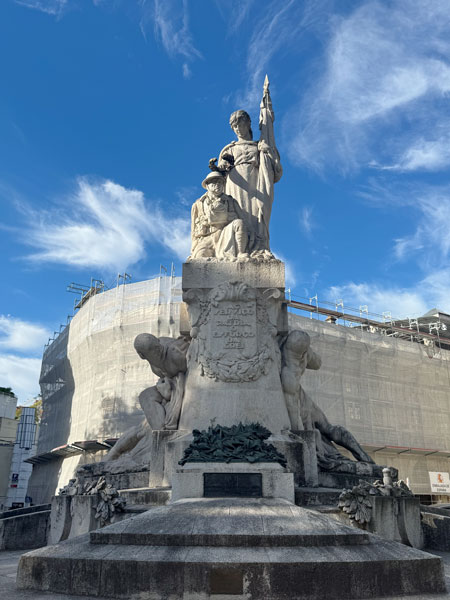
Praça dos Restauradores
Upon reaching the Praça dos Restauradores (Plaza of the Restorers), I left behind me the peaceful, shady Avenida in exchange for the hurly-burly of urban Lisbon. And this is just the first of several plazas (P. dos Restauradores, P. Dom João da Câmara & P. Dom Pedro IV) that flowed seamless one into one another, each lined with interesting architecture, monuments and street art.
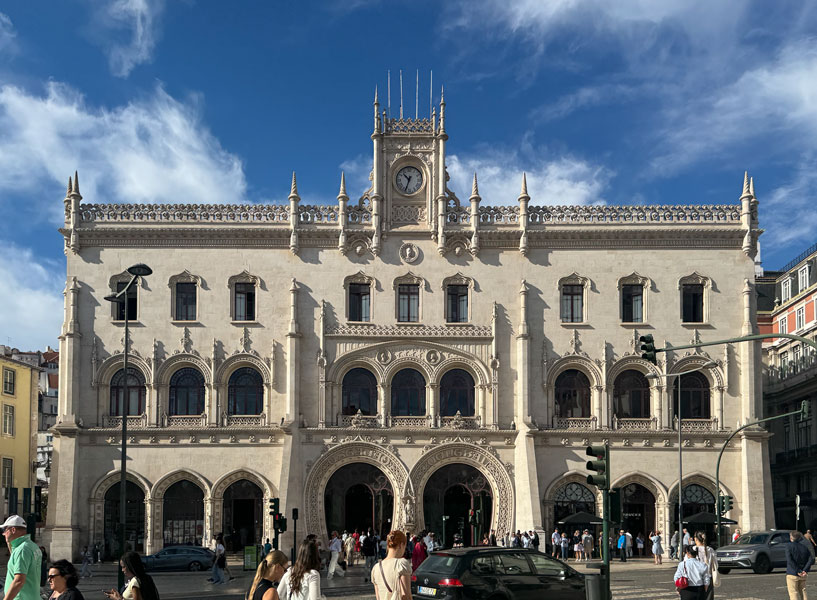
• The pair of horseshoe arches denotes the main entrance to the Estação de Caminhos de Ferro do Rossio (Rossio Railway Station).
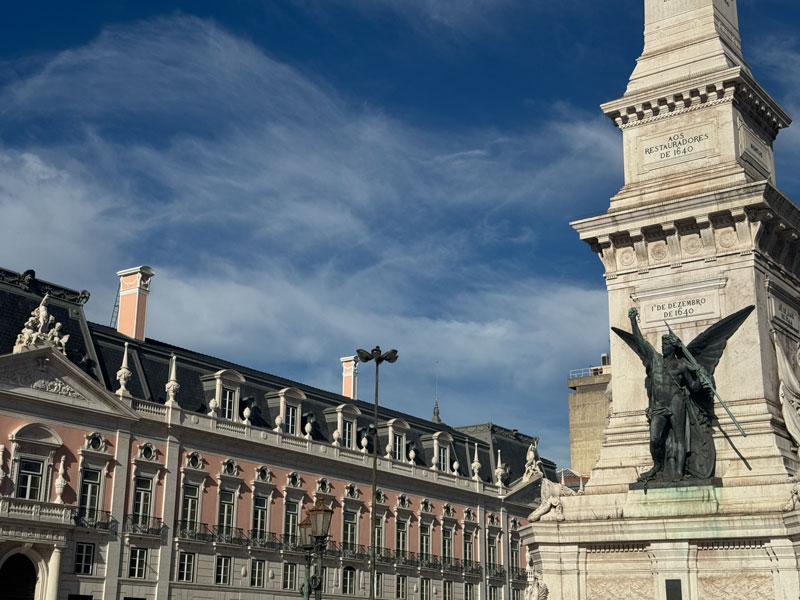
• Next door sits the Palácio Foz, its pink French-inspired exterior facing the square’s namesake monument.
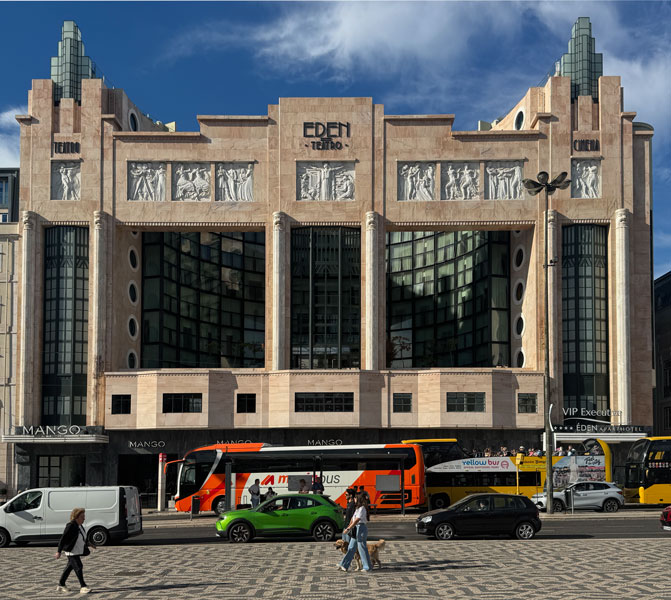
• Further on, the imposing Art Deco façade of the Cineteatro Éden (Eden Theater) is all that remains of a former movie palace, now a hotel.
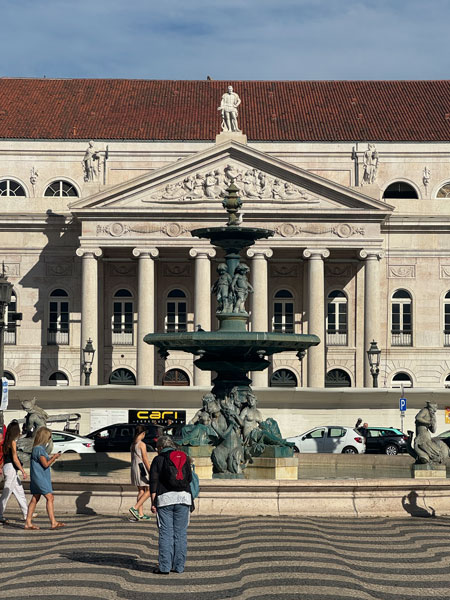
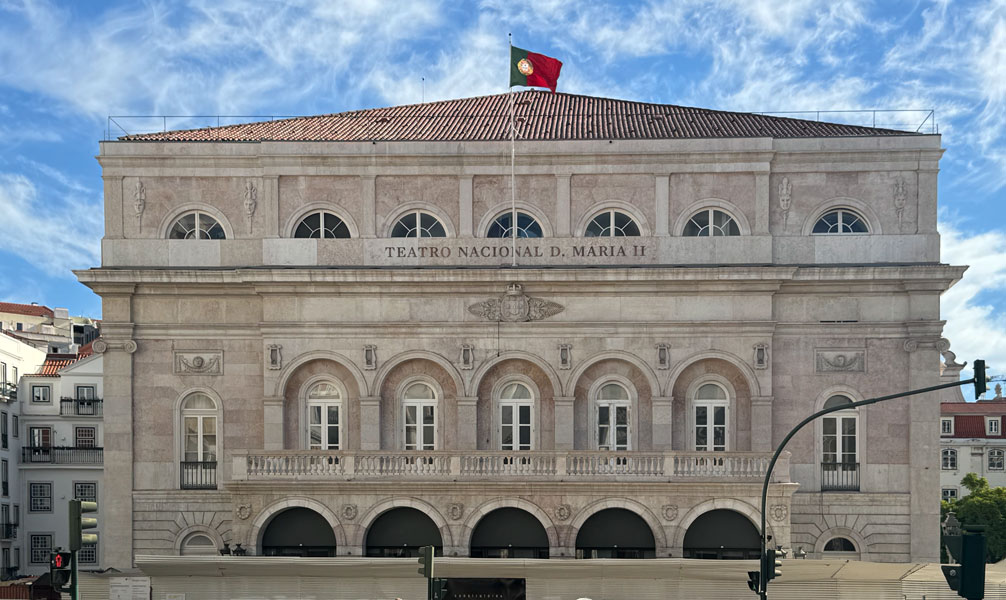
• Unbeknownst to me, I captured two different views of the Teatro Nacional D. Maria II (Queen Maria II National Theatre) from two different plazas: the imposing, columned main entrance; and its subtler, rhythmically-patterned wall of arches and windows around the corner.
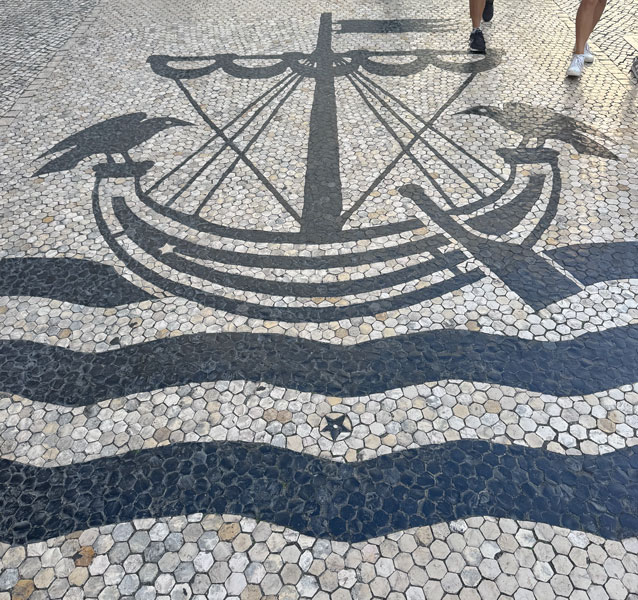
• Finally, as I prepared to leave the several plazas and head directly for the river and the Praça do Comércio, I discovered underfoot another representation of the relic-bearing ship and its winged guardians, this time in tile, honoring Lisbon’s patron saint, Vincent.
To one side, there was a sobering tribute to the victims of September’s Gloria funicular tragedy. Interestingly, tomorrow there is a national election here. In Lisbon, the current mayor, who is running for re-election, purposefully scheduled a clarification meeting on the tragedy for the day after the election, ostensibly to “de-politicize” the discussion.
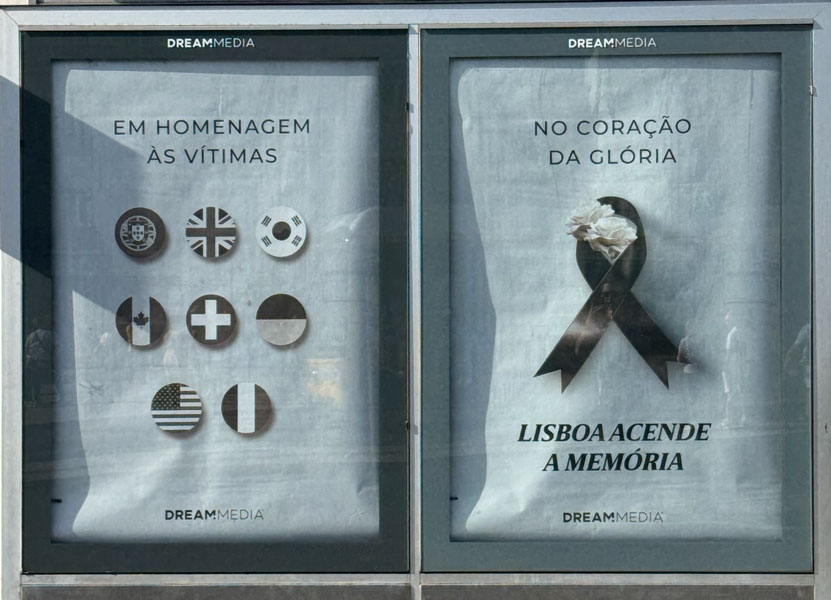
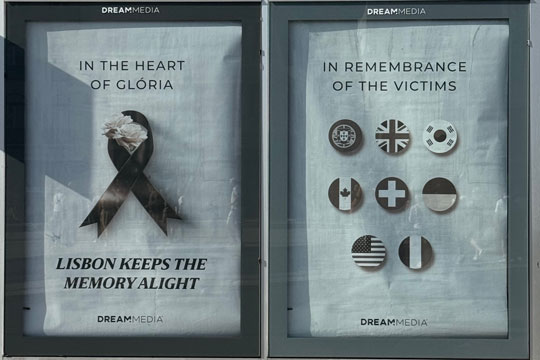
A follow-up: Unfortunately, no clarification was forthcoming at said meeting, with the politicians more interested in keeping things calm while the potentially-responsible parties continued to not address any of the operational and maintenance irregularities that have come to light since the accident. To date–it’s early November, 2025–the funiculars are still out of service.
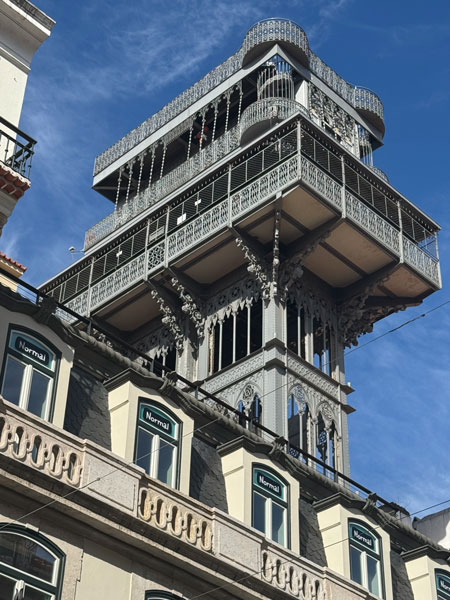
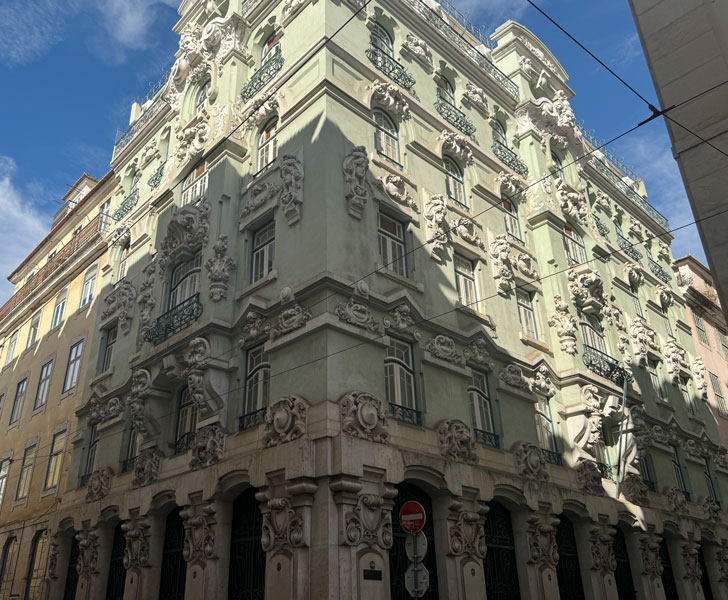
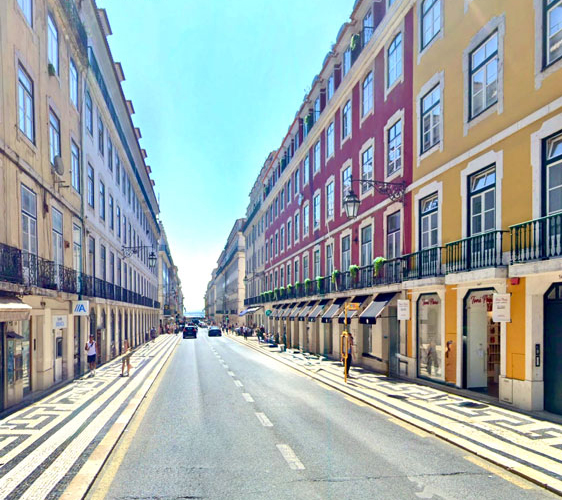
The 8-10 block walk down Rua Áurea was pretty uneventful. I passed by the Santa Justa elevator, shut down now due to the Gloria tragedy. I found an open pharmacia (Rob needed an ice bag) but came out empty-handed. At a cross street that was also a trolley route, I found the interesting pale-green Art Nouveau building. Otherwise, it was a straight-as-an-arrow route through the downtown grid.
Praça do Comércio
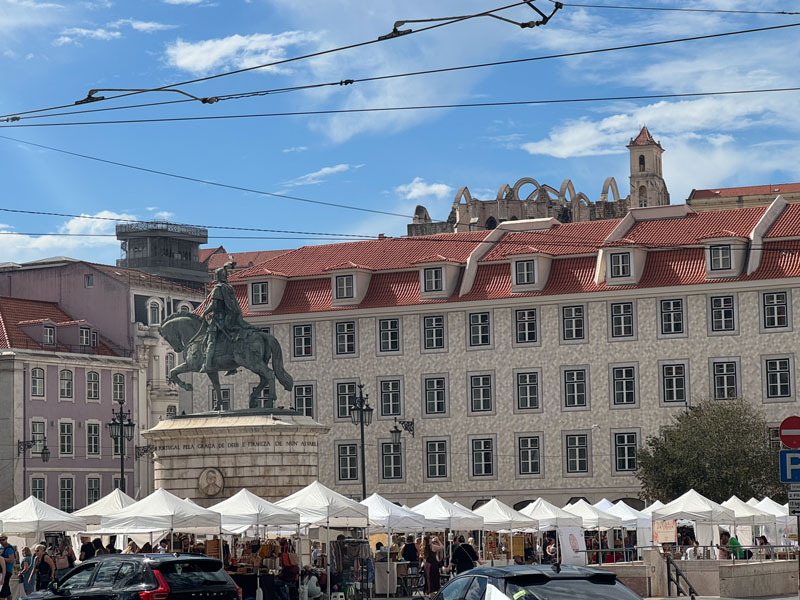
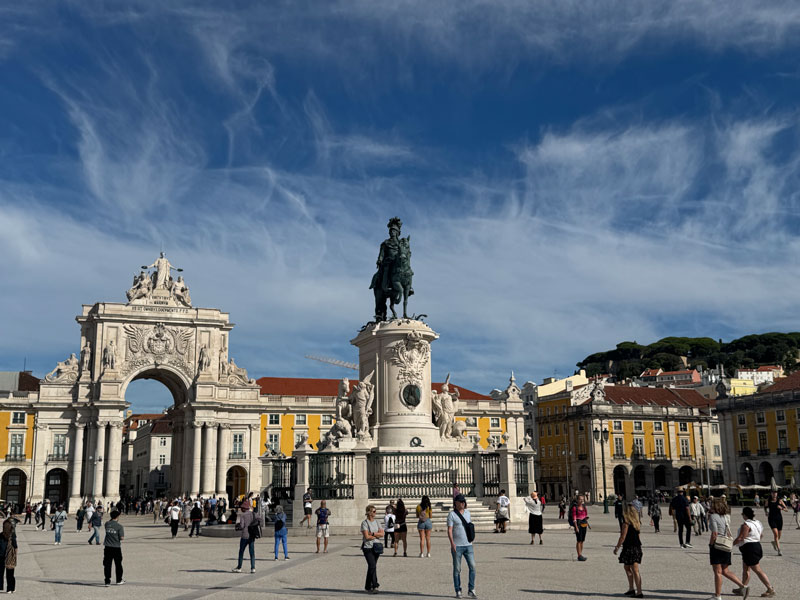
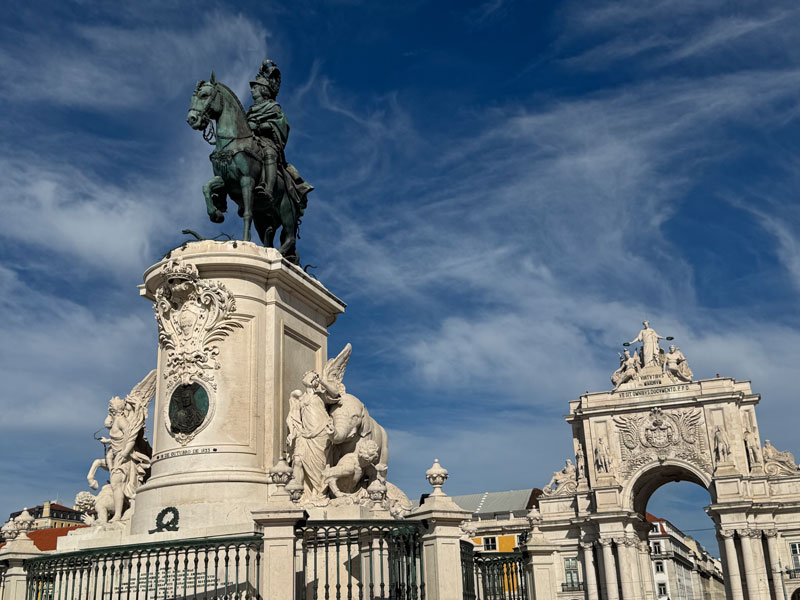
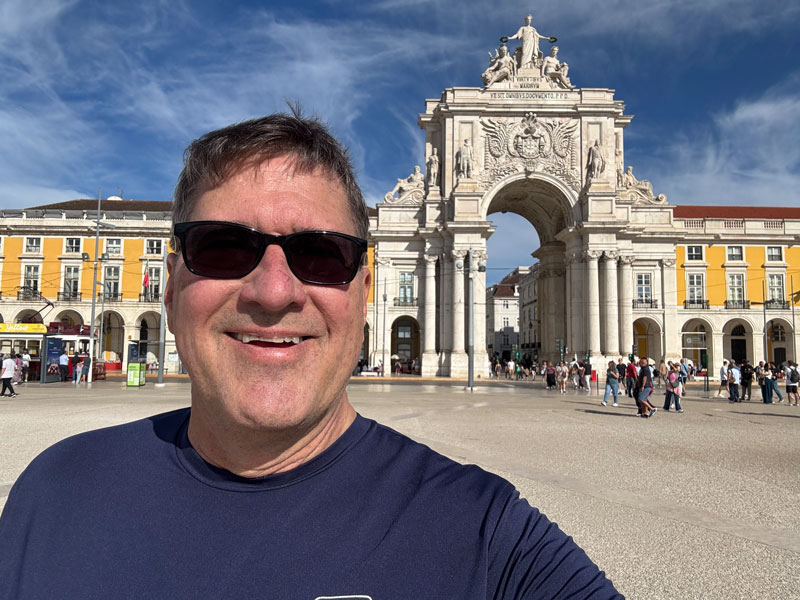
I finally reached the heart of Lisbon, a huge plaza open to the Tagus River on one side and embraced on the other three sides by galleried buildings that meet at a great central arch. In the middle, an equestrian statue of King José I dominates the space. We had passed by here yesterday on the tuk-tuk. Now I had a chance to explore this grand plaza as I walked down to the riverfront.
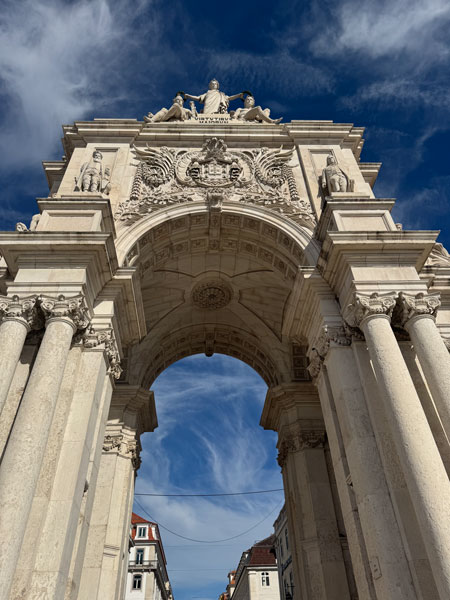
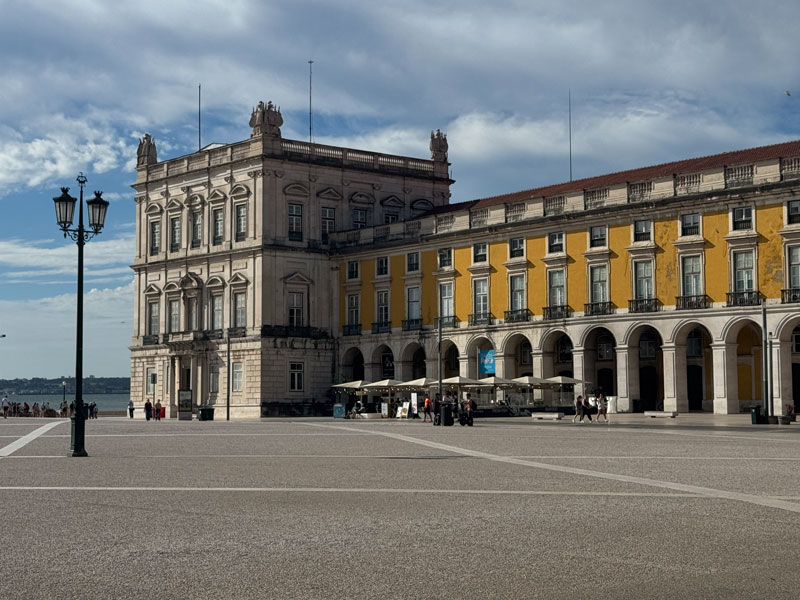
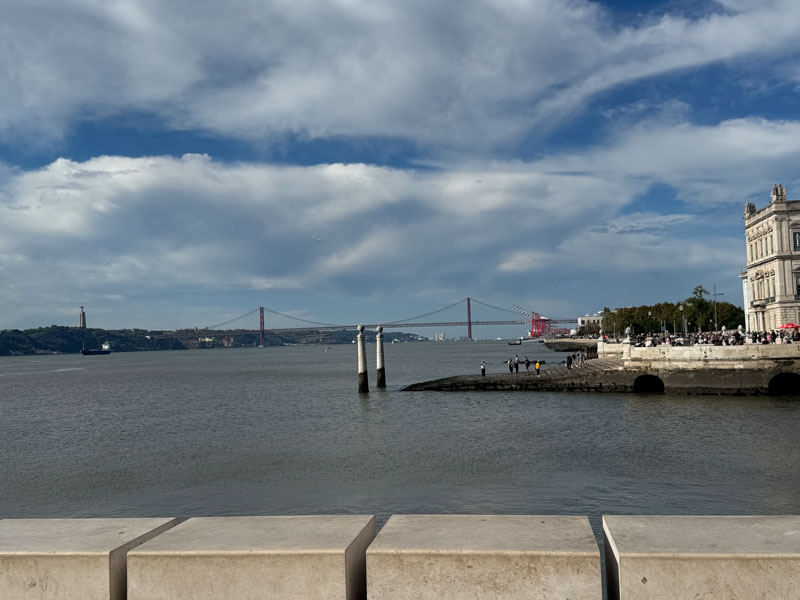
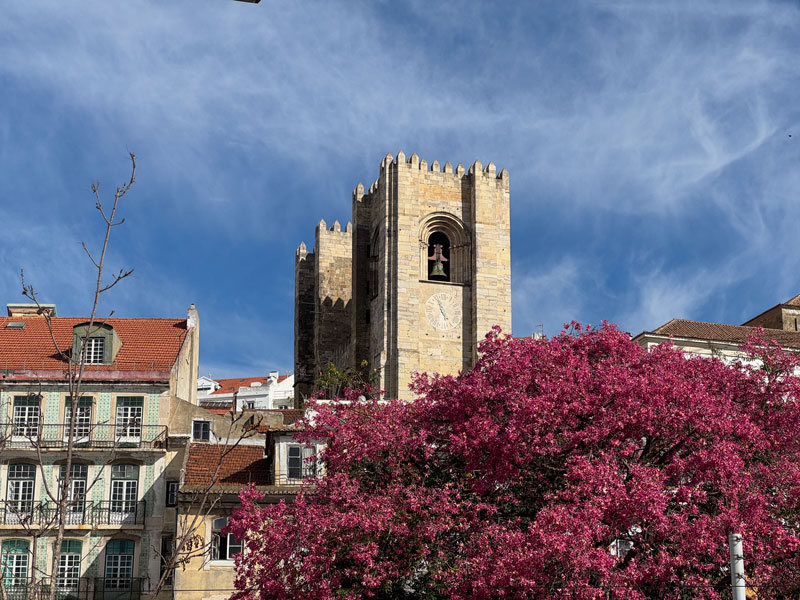
Leaving the plaza behind, I headed east northeast along the riverfront until I spotted the cathedral above the flowering tree.This was my next destination.
Sé de Lisboa
After a very arduous uphill climb, I found myself standing before the massive Lisbon Cathedral…and an equally sizable man who was denying most people entrance to the building. Why? There was a mass scheduled to begin.
So, as they say, “When in Lisbon…!” I walked back up to God’s bouncer, dusted off my Catholic credentials, and said I’d like to attend mass. In I went.
Although not as completely austere as its fortress-like exterior, the cathedral’s interior was a bit of a disappointment. The expected accoutrements of Catholicism (halo’d statues, altar alcoves, stations of the cross, etc.) were sorely lacking on the congregation’s side of the sacristy arch.
I was more than amused when the priests and servers, five in all, entered to start the service. The celebrating priest was a bit on the short side–actually two heads shorter than either flanking server–and he disappeared completely from view as they paraded behind the platformed altar.
Of course, the service was conducted in Portuguese. I recognized a total of three words: “Amen” and the sung refrain “Kyrie Eleison” which are of Hebrew and Greek origin respectfully.
I stayed put through the Gospel reading, oblivious to the words being read, then slipped out of the pew and shamefully exited through the stanchioned barrier rope that had to be opened by a slightly-judgmental usher.
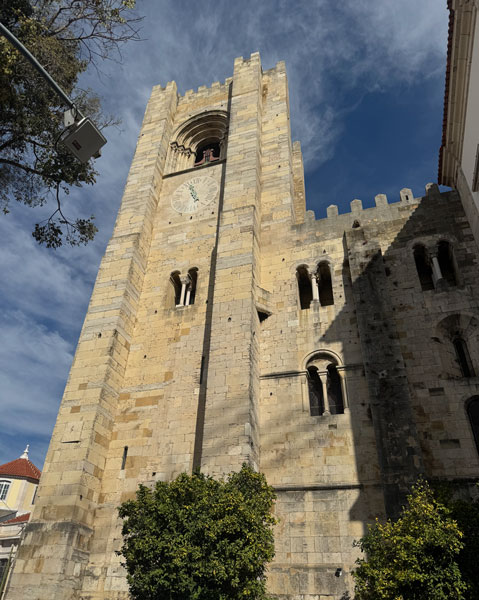
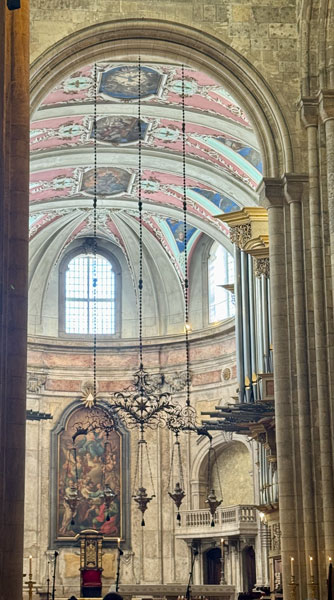
I thought the climb to the cathedral was a struggle. Exiting the church, I turned to the right, only to find myself face-to-face with a steeply-sloping cobblestone road that was but a prelude to the climb to come.
Castelo de São Jorge
This was to be my grand finale, conquering Lisbon’s fortified summit and surveying the city from atop its protective ramparts. Or at least that’s how I imagined it would be.
But you know what they say about best laid plans. I turned out to be like the Little Engine That Couldn’t! Yes, I struggled, climbing and climbing the steep, twisting, narrow streets that led to the small square containing the castle ticket office and entry. As I paused to catch my breath (not the first time!), I became painfully aware of the long line of people waiting to get tickets and/or gain entry that I had completely missed as I struggled uphill. I was disheartened, to say the least…disheartened, defeated, thirsty and needing “relief”.
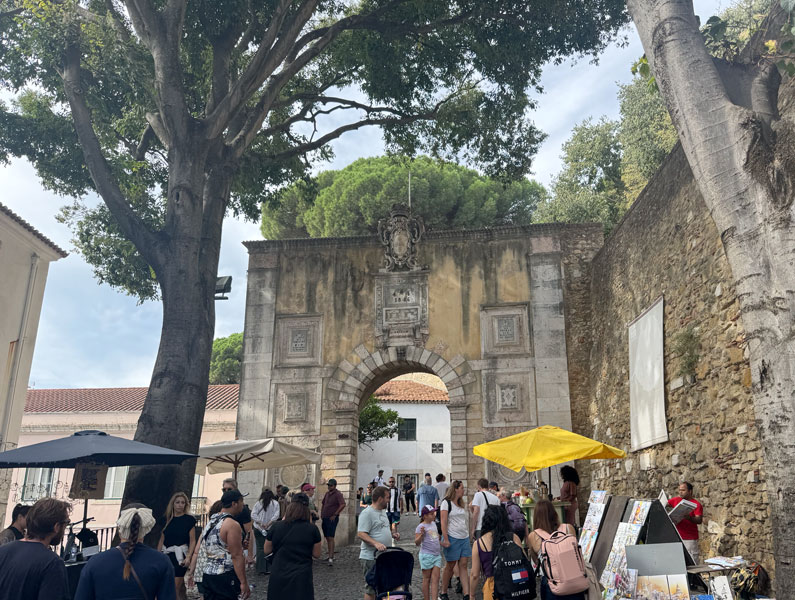
So, with St. George’s Castle within spitting distance, I made the decision to skip all the queues, do an about-face and start my descent while keeping an eye out for some little spot where I could rest, refresh and relieve myself! Luckily, about halfway down the hill, I chanced on a small restaurant with some outdoor seating that provided the much-needed respite and refueling.
When I reached ground level, at a plaza very near the other three I’d crossed earlier today, I summoned an Uber to transport me back to the hotel.
Dinner with fado performances
Grand Circle arranged for our evening’s meal with an included fado performance at this hidden restaurant situated deep in an old neighborhood of Lisbon. We would never have been able to locate it on our own. Nor would we have sought it out as we have actively avoided any near occasions of fado…until now.
Fado music is considered to be a symbol of Portugal. It is characterized by mournful tunes and lyrics carrying a sense of resignation, fate and melancholy. These doleful feelings are encapsulated in the Portuguese word saudade. Defying definition, it was described as “the price you pay for the love you feel.”
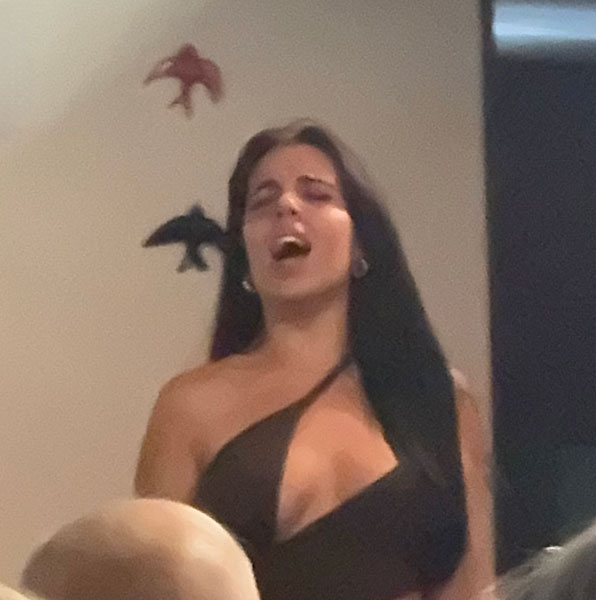
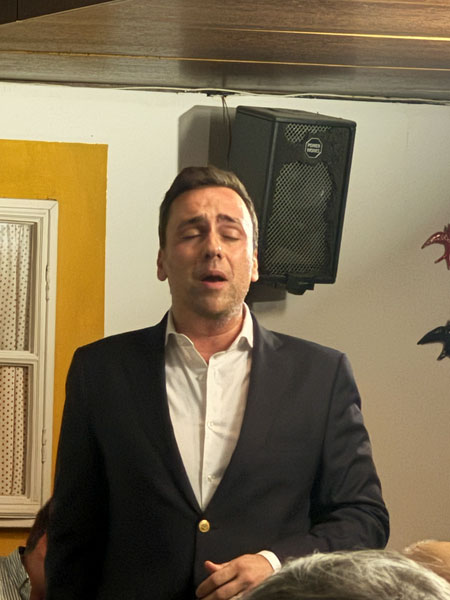
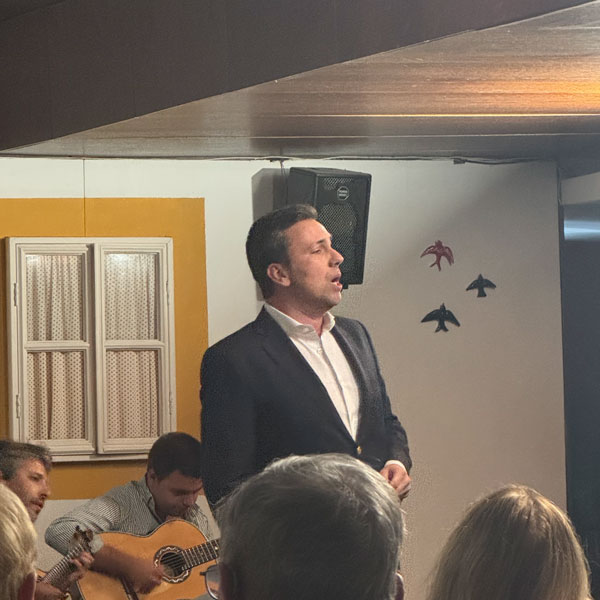
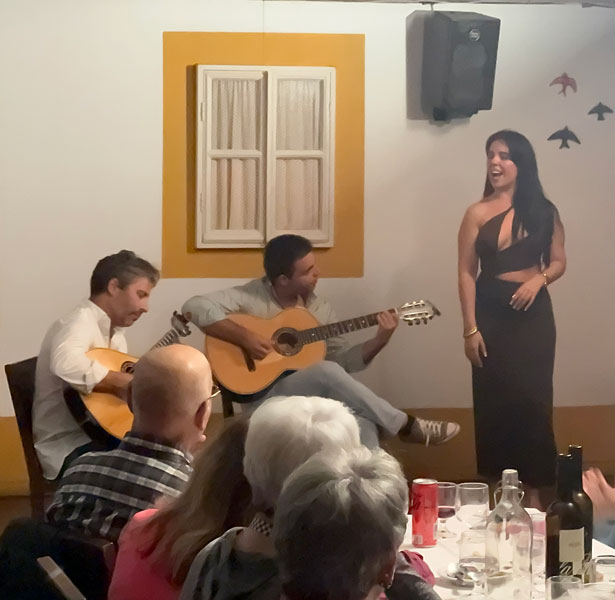
After being served dinner, a pair of fado singers performed separately, accompanied by two guitarists. (One played the 12-stringed, pear-shaped Portuguese guitar considered essential to the genre.) Both performers were outstanding vocally and emotionally. As to what they were singing about, I haven’t a clue!
 Portugal: Lisbão to Oporto